Questions of Faith and Religion

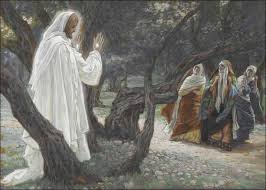
jesus women 

Have you ever been to a place that seems familiar, but you can’t quite remember if you have ever been there? Life can be very vexing at times. There are more things in our world that ask questions that we are incapable of answering, at least on an intellectual level, but are very answerable on a spiritual level.

If there are no answers on an intellectual level, where can we find answers. I am reminded of Yogi Berra’s comment, “It’s Deja Vu all over again.” Funny, isn’t it? But maybe not. Have we been there before, or is it a place that just reminds us of somewhere we’ve been?

I am reading William Walker Atkinson’s A Series of Lessons in Gnani Yoga, published in October 1906. It is the Eastern view of how Western religious philosophy has drifted so far away from the teachings of first century Christianity. There are explanations explaining some of the mysteries that are not answered in the King James Bible, or any modern translation. I have done considerable reading about first century Christianity; what the Apostles of Jesus taught throughout the then-known world. These are the men who traveled with Jesus, or traveled with those, who did travel with Jesus.

What we learn today differs greatly from the teachings of these apostles. Their lessons are far removed from the alterations and edicts from the Western Church that have come down through the centuries. For instance, women were an important part in Jesus’ ministry; after all, the first appearance of the Good News of Jesus’ resurrection was to women. The women in the New Testament play an important role in His healing and His preaching. But, throughout the centuries, western religion has usurped the role of women and placed them in the subservient position, which is not much better than the slaves in the history of the USA.

How can we accept these ancient teachings? Henri Nouwen has a classic but often forgotten idea: solitude and meditation. When we are alone and in meditation to get closer to God, we open our minds and hearts to hear God speak to us. Nouwen says that solitude is the garden that allows our heart to flourish in God’s good news of Love. Our being alone (with God) will calm our anxious minds, erasing the stressful unhappiness that seems to control our waking hours. Solitude and meditation is essential for our spirit to grow in God’s Love and accept the confines of the hectic world we live in. This is in line with what the 1st century Christians did. It brought them closer to God.

How does this ancient set of Christian beliefs evolve from remembering a place you have never visited? Good question.

Christian teaching has always been that life extends beyond the grave. The question is, how, to what extent. We have placed little thought to where, when, and how this occurs. Are we reborn to new bodies and remember bits and pieces of our former identities? Or, do we learn a collective knowledge, such as the instinct that is so noticeable in dogs and other four-legged beasts?

 I must think more about this. Maybe when I discover a reasonable response I will return to this topic.

Have a great day.


Crossing the Road

chicken Why did the chicken cross the road?

We can be cute and answer, “to get to the other side;” or, we could be scientifically serious and respond with dietary and avian philosophies dating back to the time of Laozi, 260 years ago in China.

But what about us, what about the human animals that will cross a road only for a sale, or a restaurant, on the opposing side of the avenue? We are too wrapped in our own circles of influence to be concerned with crossing the street for anything other than mundanity.

If we are truly neighbors to those around us, if we truly accept that the family across the road and our family are worthy of each other, then we must cross the road for the benefit of both families. There is too much disengagement and segregation between black people and white people, between gay and straight people, between young and old, between sick and healthy, between prisoners and free people, between Jews and Gentiles, Muslims and Christians, and Protestants and Catholics.

Life’s demands make it imperative that we cross the road; we need to notice that our neighbors suffer, as we do. Perhaps, if we share with our neighbors, more than just a “Good morning, brother,” we will learn to appreciate that what happens to either of us happens to all of us.

Luke 6 says, “How can you say to your brother, ‘Brother, let me take the speck out of your eye,’ when you yourself fail to see the plank in your own eye?” Do we remember how painful it is when we get a piece of sand in our eye at the beach? I don’t care how old we are; our first instinct is to run home to Mama for her to stop the pain.

Our lack of caring, or even trying to understand, what it’s like across the road hurts us, just as much as the grain of sand in our eye.

Loving our neighbor is not a luxury to be cast aside with irrational whims; it is a gift to cherish.

Loved and Lucky

animal love

Lucky to Love and to be Loved 

If God truly loved us, why are there wars? Why are there fatal illnesses that kill little children before they can appreciate what love is? Why do we pray, when most of the time we can never know if our prayers are answered?

Confusing questions from a confused mind. Well, maybe not so confused. I do believe that prayer opens a conversation between me and God. I believe that prayer is the poetry that seals our relationship with something other than our mundane life on planet Earth. It links our known existence with the unknown forces that we do not and cannot understand. Prayer, and the Love that follows, brings forth a compassionate behavior that allows us to appreciate one another in this hectic world in which we reside. Without this compassion, without this Loving behavior, we would only live alone, out of touch with anyone else. We could not abide by others’ idiosyncrasies. Without this compassion and its permanent companion, Love, we would have no future to anticipate. Everything we do would be to satisfy the cravings of a shallow existence. We would be miserable; we are unhappy.

Ultimately, we have no choice but to accept that there is a universal Love that permits us to be, well, us. Love permits us to enjoy Life, the Life given by God. This also invites us to love not only God, but all people. Without this Love directed to our friends and neighbors, known and unknown, life would not be mysterious; it would be terrifying and useless.

We need each other; we need the Love we share between ourselves and between ourselves and God. This keeps us enjoying everything around us – our friends, our families, and the activities that keep us wanting for more.

To Love is to risk. I have loved many people in my life, and many times I have been hurt, felt abandoned, or depressed, unable to understand the rejection. Since I am now considerably older, I recognize that people who hurt those who love them misinterpret Love for what it is. Love is not infatuation; love is caring for others the way God cares for us. Some of my long-ago friends, and some of my current friends, are too fearful of, well, of anything that may put them in harm’s way. They are too afraid to Love, not love, but Love. I wish I were as caring at age 24 as I am at age 74. I probably would have had no hesitation in telling all my friends, my Marine buddies, my teachers, and yes, my family that I Love them, and always will. For some, it may seem too late; however, I am comfortable with the understanding that when I look back on my life and tell someone from my past that I Love them, I know they hear me. And, I am no longer hesitant to express this Love.


Love on the Cross

love

Meditation:

Jesus gives us an awe-full (as in full of awe) gift in Matthew 22:

When asked by one of the apostles which is the greatest commandment, Jesus response was to love the Lord your God with all your heart, with all your soul, and with all your mind. And the second is to love your neighbor as yourself.

Jesus repeats this in John 13: – I give you a new commandment: love one another; as I have loved you, so you are to love one another.

This was and still is quite an awe-full task; not the one word awful; the two words awe and full.

We are in awe of the immense responsibility this commandment imposes on us.

As I was thinking about concept of Love (capital L), several ideas invaded my meditation.

We know that one of the greatest gifts God gave us through Jesus is the ability to love – to love one another. Taken in this light, perhaps the second greatest commandment is not a commandment at all, but it is an invitation to share in the Love God freely gives us.

During the adult forum on Sunday, Joe demonstrated the effect of communion with God – the vertical communion between God and man. And by spreading that with our neighbors, we are spreading God’s communion horizontally, thus completing the message of Love on the Cross. Jesus demonstrated this Love when he forgave those who crucified him.

This is the second time in as many days as this image was presented to me. On Saturday, while attending the Diocese’s Intercultural Summit in Richmond, Bishop Shannon demonstrated the same vertical and horizontal relationship between man and God, and man and man when it comes to reconciliation and repentance. These concepts are freely given by God to us, only to be shared with one another, thus completing Jesus’s mission on the Cross.

If we are truly to share in the gift of Love, God’s Love, we must not only love God with all our hearts, with all our souls and with all our minds, we must do the same for, with, and to all mankind.

After all, we are all children of God and we will all be recognized as this after we leave our bodies.


Life, Death, and Love

doggy love

Life, Death, and Love

No, I am not talking about leaving this earth as we know it, only as we perceive it. That is, if we can ever accurately understand it.

I was born in 1943 to a 55-year-old father and a 26-year-old mother, who already had a daughter, born 18 months before my arrival. As with all families, ours was the typical American family in the late 1940s and early 1950s. I think it would be generous to say that we were upper lower class. My father, a 1912 Yale graduate, lost everything with the market crash in 1929, including his first wife. Fortunately, they did not have children. My mother was from a very lower class southern European family; she worked two jobs and raised her younger siblings during the Great Depression. My maternal grandmother was a barfly and two years younger than my father.

When I was 15, my father was 70. I emphasize this because I was raised by a relatively young mother and a grandfather, so to speak. At best, there was peace in our family. I cannot say that there was an overly emphasis on showing love – at least through physical connection. dis

My father was a Christian Scientist and spent many hours towards the end of his life reading his Bible and Science and Health. He was a gentle soul who rarely showed his emotion, reflecting on his New England raising.

For many years, and even today, when I reflect on it, I feel cheated from a life with a normal father to take me fishing or teach me to throw a baseball; I could pad the list with examples. Then I think what I learned from my father and his relationship with God. First: be thankful, for health, family, a roof over your head, an income; I could list many other things, but you get the picture.

My father, mother, and sister have all passed into God’s eminent domain, and I have a hard time thinking of them in a loving fashion. It is a very difficult struggle to remember love, when for all practical purposes, there was little. Henri Nouwen reminds us that it is not always easy to express our love even to those who mean the most to us. We do not have the proper words to express how we truly feel; for example, in Greek, there are five separate words for the concept of love. We have one. . .

I really do not care how many words we have; if we can say “I love you,” we create a whole different world for us. Jesus lived a life of unconditional love, even loving from the cross, when he asked God to forgive those who crucified him. As I recall my family, can I do any less?

When I open myself to admit that there is love between me and my family, even if they are no longer physically with me, I realize that Clarence, Beatrice, and Judith are not gone; they are still alive in my mind, still alive in my body, still alive in the very essences of my life.

For this, I am grateful.

Turn Around

Source: Turn Around

Losing ego!

ego

Henri Nouwen says, We belong to a generation that wants to see the results of our work. We want to be productive and see with our own eyes what we have made; but that is not the way of God’s Kingdom. We are too enveloped by our own importance, causing both external and internal pressures.

Our friendships and relations with all others can be challenged by this egocentric obsessive personality trait. On a grander scale, this egocentricity can be disastrous for many greater relationships, causing permanent damage with these relationships, or at least a permanent lowering of trustworthiness.

Internally, this obsession can cause both physical and psychological difficulties, triggering unfortunate long-term results. If we concentrate on our true inner selves, we are rewarded by better relations with others and with ourselves, William Stafford (1914-1993) says this best in his poem, “The Way It Is,” expressing what the true inner self means:

There’s a thread you follow. It goes among
things that change. But it doesn’t change.
People wonder about what you are pursuing.
You have to explain about the thread.
But it is hard for others to see.
While you hold it you can’t get lost.
Tragedies happen; people get hurt
or die; and you suffer and get old.
Nothing you do can stop time’s unfolding.
You don’t ever let go of the thread.

That thread is your true self, the one created by God. This is the self that we must please, the false self, the one concerned with our productivity and self-importance, is the one that causes our problems. Stafford says that this self is difficult for others to see; I say that all too often, it is very difficult and sometimes impossible for us to see this true self. We are too busy to allow this true self to emerge. It takes practice, and all too often, it is hiding from us. We must take the time to find its hiding place within us.

I do take the time to meditate, daily if possible. Much of my meditation is trying to contact my true self. My brain is so focused on what I have to do, what I did not do that my mediation seems unfocused. And, it is! I find it difficult to be patient enough to allow my contacting my true self. However, those days that I do reach down and allow my inner self, the one created by God, comes out of hiding. The feeling is euphoric. I come out of my period of mediation to a world that looks beautiful.

We are promised rain today, tomorrow and the next few days in Virginia. So what! By allowing my inner voice to speak this morning, the day is not a waste. The weather-forced limitation is given by God to allow me to quiet down, read, write, and stop to smell the proverbial roses.

What a truly joyous day this is.


Caring

tableCaring for others:

We are at a time in our lives when we must look beyond our own interests and look to the welfare of others. Jesus is a part of us, coming in the form of the poor, the sick, the disables, the rejected. It is only there that we confront him. He was and remains always on the side of those rejected by the Pharisees (think the rich and powerful).

We are faced with overwhelming deprivation in the United States; this should be a call to act in favor of those on the bottom rungs of society. WE have to act now to reduce the fate of those living in poverty. The Spirit of Truth (think God) draws us toward a much-needed greater empathy of our neighbors’ conditions, much needed is the training our minds and hearts to utilize the tools afforded to us, both on the government and non-government levels.

Reading about ALICE, (Asset Limited, Income Constrained, Employed), my eyes were opened to the realities of trying to live in communities, such as Fredericksburg, but also all around the United States. Over half the jobs in the Fredericksburg area, requiring a high school diploma pay less than $20.00 per hour (a total of $800.00 per week, or $40,000 per year). Yet, when looking at living expenses in the area, the minimum income required for a family of four to live above poverty is over $60.000 per year (or $25.00 per hour). Making less than $25.00 per hour forces the family to eliminate one or more necessities. It is no wonder that there are so many homeless students in our area schools. Jesus opened the door to God’s Love to all people, not just the Pharisees.

The number of people who shop at The Table at St. George’s and who make livable (?) wages is surprising; but reading about the cost of living compared to the average income, it is no wonder that our needs for greater funding to keep The Table a worthy force against malnutrition continues to grow. The Table allows people to shop every week. Although I commend other food sources and their abilities and desires to assist our ALICE neighbors, I do question how some can restrict a household to shop only once every six months. Somehow, this does not acknowledge the words of Jesus when he said that what we do to the poor, we do to him.

We need to pray our existences, acknowledging the dignity of our own life and the dignity of others. We need prayer to discern how to factor this gift delegated to each of us by Jesus; we need a path bringing us back to live in a world filled with God’s undying love for all his children, particularly those in need. We must do this, not for ourselves, but to honor the lives of all God’s children.


Transfiguration Sunday

transfiguation

The Feast of the Transfiguration

Malcolm Guite’s “A Sonnet for the Transfiguration” begins: For that one moment, ‘in and out of time’, On that one mountain . . . and ends thusly: Eclipse that glimpse of how things really are.

This makes one think about what the scene on the mountain really means. I am basically referring to Luke 9: 28-36. You can read it to see how you might interpret it. In this scene on the mountain top, Peter sees three images: Jesus, Moses, and Elijah. Three very important prophets in biblical history. All were messengers from God, to whom nobody really listened until many ages later. All were spurned in their life on Earth.

Many times, the apostles lacked understanding of what Jesus said in his parables; and Jesus took the time to explain their meanings. By the time the Transfiguration occurred, the apostles were not yet commissioned, or taught, all that Jesus later conferred on them. Understanding this, could Peter have misinterpreted, or at least misidentified, the three images. (I am thinking the Trinity here.) All three figures were semi-clouded in mist, so this could easily have happened. A voice, presumably God’s, says, This is my Son, my Chosen, listen to him. They kept silent? Why? Did they not understand?

Perhaps the transfiguration occurred in the minds and hearts of the apostles, not in Jesus. Guite ends with the words, as things really are. Jesus was not transfigured on the mountain; He was always the Son of God, living as the true earthly image of God. (Think about the dove coming from heaven when John baptized Jesus.) I feel that the Transfiguration occurred in the eyes of the apostles. For the first time, they truly saw Jesus as Jesus truly was . . . as he truly is.

Just something to ponder on . . .  


Ripples

ripples

Ripples in life, as the ripples in water, are both hypnotizing and mysterious.

Like the ripples on the surface of water, my life has affected many people. The ripples are on the surface, but below the visible plane; these ripples create dynamic changes in people. We just do not always accept or see these changes. They may be far into the future.

For many years, I thought my life was a failure. As I reflect on what I did with my time, I did not, and to a certain extent, cannot accept the fact that much of my life was wasted, non-productive, and replete with failures.

In my schooling, I was not a scholar; I was not an athlete; and I was definitely not a part of the in crowd. I even failed out of college – twice. So, I joined the Marines to toughen my inner being. It did just that . . . sort of. I was not a great Marine, due to physical issues. My injuries earlier in my life kept flaring to keeping me from any true success. I was medically discharged before my unit was sent to Vietnam. Now, don’t get me wrong; I had no desire to go into combat, to kill, or be killed – or worse. Other than strengthening my fortitude, what purpose did my joining the Corps do for me, or the country? I seem to have wasted three years of my life. Pride, in itself, is no reward.

For almost thirty years, I labored as a small businessman, joining my parents’ retail business after my discharge from the Marines. I joined this business to assist my mother, when her camera salesman quit suddenly. I did not realize this at the time, but I was then trapped in this business for thirty years, due to the self-loathing of my mother and her constant threats of suicide. I left the business as a failure, broke, in debt, with only thirty years’ experience dealing with people for my efforts. This, however, prepared me for the next stage in my life.

Reflecting on this, I can now say that my long-held guilt of leaving the Marines early and the inability to turn the retail business into a profitable entity, did, in all likelihood, affect many people. I see now that in addition to giving me an understanding and compassion for others, my hiring of many young people over the years matured them in many ways. I remember one young lady, Rachel, whose only desire was to finish school, marry, and be the best mother she could be. Several years after she worked for me, she did return to share her new status as a mother. Another young employee, a boy, wanted to attend college and become a doctor. Unfortunately, I lost touch with both, but I am sure that they are very successful in whatever they are doing now; remembering that they are now both in their sixties. I am also sure that most of the others, and there were hundreds over thirty years, have been successful mature adults. Unfortunately, I have lost touch with them, and I remember few of their names and faces.

In 1993, I began my quest to becoming a teacher, by working as a swim coach for a local high school. This began when my son was still in school, I was the president of the booster club, and the swim team coach quit suddenly. For three years I labored as a coach, and a retailer. However, since 1997, after becoming a productive teacher, I did virtually everything in the school to promote the welfare and opportunities for all students. I had both boys and girls hug me for affection and thanks for how I treated them. As I have remained friends with many of them through Facebook, I continue to revel in their achievements.

Thinking about my early teaching career, I tutored a young lady, fat and on drugs, who would not conform to high school rules or society. I think we talked more about life’s successes and failures than we talked about history. She did graduate on time; I was hired as a full-time history teacher; and we parted ways. I met her years later, when she thanked me for all of the frank talks we had. She is now a history teacher in New Hampshire. One of the first students I had, when teaching in high school, was a young boy who had mild Asperger’s syndrome. He was in one of my history classes, and also asked to join the debate team I was mentoring. He is now an international banker. Another young man, who has Cerebral Palsy, has matured into a bright college student, majoring in film animation. Many of the young people I mentored are now parents in their own right and share their lives with me through Facebook.

My efforts with these students are ripples in the lives of many, as they go and share their talents with others. They are not only creating ripples on the surface, they are making waves in the lives of many.

I may at times revert to the insecure feelings I had before entering teaching, but deep inside, I know that what I have done for others is more important than any feelings of self-importance and success on my part. As I continue to teach at a local community college, I still am happy to know that I am affecting the lives of my students.

My wish now is to finish my life as a part-time English professor and a writer of inspirational literature that may or may not be shared with the general public. I still would like to be a positive influence for those around me.

I am reminded of the verses in Proverbs 17:3: The refining pot is for silver and the furnace for gold, but the Lord tests hearts. I believe that the only thing stopping me is the same type of ailment, magnified, that caused my early discharge from the Marines, but the Lord reached into me, and I am cured of the life-long pain that I have had from a severely injured back.

May God bless all of those I have influenced.